Apr - Jun 2025
www.dhan.orgVayalagam and SDGs
State level Policy Seminar
Water is essential for life, serving vital economic, social, ecological, and spiritual purposes. Throughout history, human civilizations have thrived along rivers and water bodies. India's monsoon climate made it necessary to build storage facilities to capture rainwater. For centuries, people demonstrated remarkable engineering, management, and social skills by building and maintaining extensive rainwater harvesting structures like tanks and ponds.
Water and the SDGs: The Central Role of Water in Achieving a Sustainable Future
On September 15, 2015, 193 countries adopted the United Nations 2030 Agenda—an ambitious global commitment to end poverty, fight inequality, and protect the planet by advancing 17 Sustainable Development Goals (SDGs) by 2030. Water is uniquely cross-cutting and central to all SDGs, making it a critical enabler of socioeconomic development, ecosystem health, and quality of life.
SDG 6—Clean Water and Sanitation — directly addresses the human right to safe water and adequate sanitation. However, water’s influence goes far beyond SDG 6, driving progress and connecting every goal:
- SDG 1: No Poverty – Access to water is foundational for prosperity; investments in water reduce poverty and support health, education, and economic opportunities.
- SDG 2: Zero Hunger – Water is essential for agriculture and food production, directly impacting food security and nutrition.
- SDG 3: Good Health and Well-Being – Clean water prevents waterborne diseases and supports community health.
- SDG 4: Quality Education – Safe sanitation in schools improves educational outcomes, while water education empowers future leaders.
- SDG 5: Gender Equality – Women and girls benefit from accessible water by gaining safety, health, dignity, and equal opportunities.
- SDG 7: Affordable and Clean Energy – Water and energy systems are interdependent; renewables can power sustainable water solutions.
- SDG 8: Decent Work and Economic Growth – Water infrastructure creates jobs and drives economic activity.
- SDG 9: Industry, Innovation and Infrastructure – Innovation in water management underpins resilient societies and economies.
- SDG 10: Reduced Inequalities – Equitable water access is vital for social inclusion and justice.
- SDG 11: Sustainable Cities and Communities – Urban resilience depends on efficient, fair water management.
- SDG 12: Responsible Consumption and Production – Sustainable water use reduces environmental footprints.
- SDG 13: Climate Action – Water is at the center of climate adaptation and mitigation efforts.
- SDG 14: Life Below Water / SDG 15: Life on Land – Healthy aquatic and terrestrial ecosystems rely on sound water practices.
- SDG 16: Peace, Justice and Strong Institutions – Fair water governance prevents conflicts and promotes stability.
- SDG 17: Partnerships for the Goals – Collaboration is essential to manage water sustainably across sectors and borders.
DHAN and Water
DHAN has initatied the restoration of irrigation tanks and contibuing the works for past three decades in the rural villages and enhancing the life of millions of small and marginal farmers. So far, the DHAN Vayalgam (Tank) Foundation (DVTF), the water thematic programme of DHAN Foundation, has helped restore over 5,000 irrigation tanks and ponds, etc and 104 watersheds. DHAN Vayalagam is now presently working in 7 states on various water conservation activities.
Vayalagam's Contribution to Sustainable Development Goals (SDGs)
Ponds, tanks, and other surface water bodies are not isolated features; they are crucial components that directly or indirectly influence all 17 Sustainable Development Goals (SDGs). Their health and proper management are fundamental to achieving the 2030 Agenda for Sustainable Development.
Vayalagam's activities significantly contribute to all 17 SDGs in various ways. Our contributions are grouped into four main areas:
- People & Social Well-being: This includes contributions to SDG 1 (No Poverty), SDG 2 (Zero Hunger), SDG 3 (Good Health and Well-being), SDG 4 (Quality Education), SDG 5 (Gender Equality), SDG 6 (Clean Water and Sanitation), SDG 10 (Reduced Inequalities), and SDG 11 (Sustainable Cities and Communities).
- Planet & Environmental Sustainability: This covers SDG 6 (Clean Water and Sanitation), SDG 7 (Affordable and Clean Energy), SDG 12 (Responsible Consumption and Production), SDG 13 (Climate Action), SDG 14 (Life Below Water), and SDG 15 (Life on Land).
- Prosperity & Economic Development: This involves SDG 7 (Affordable and Clean Energy), SDG 8 (Decent Work and Economic Growth), SDG 9 (Industry, Innovation, and Infrastructure), SDG 10 (Reduced Inequalities), SDG 11 (Sustainable Cities and Communities), and SDG 12 (Responsible Consumption and Production).
- Peace, Justice & Partnerships: This focuses on SDG 16 (Peace, Justice, and Strong Institutions) and SDG 17 (Partnerships for the Goals).
Community Workshop on SDGs
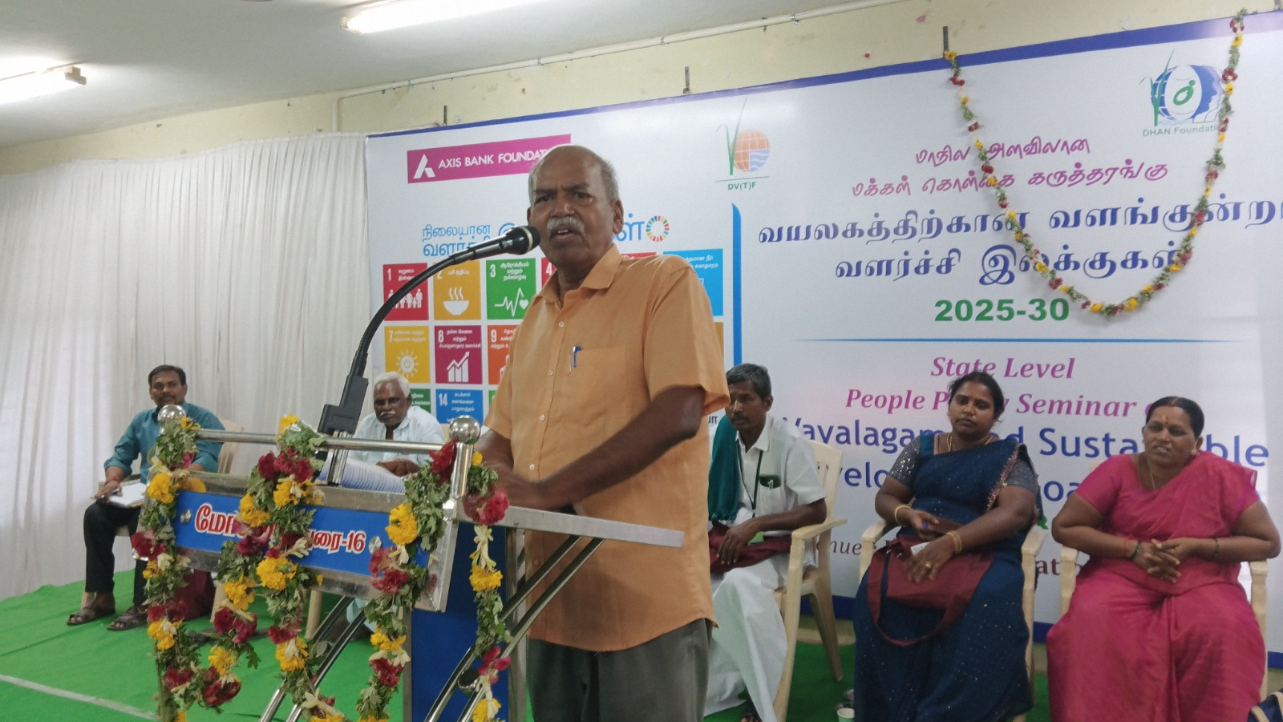
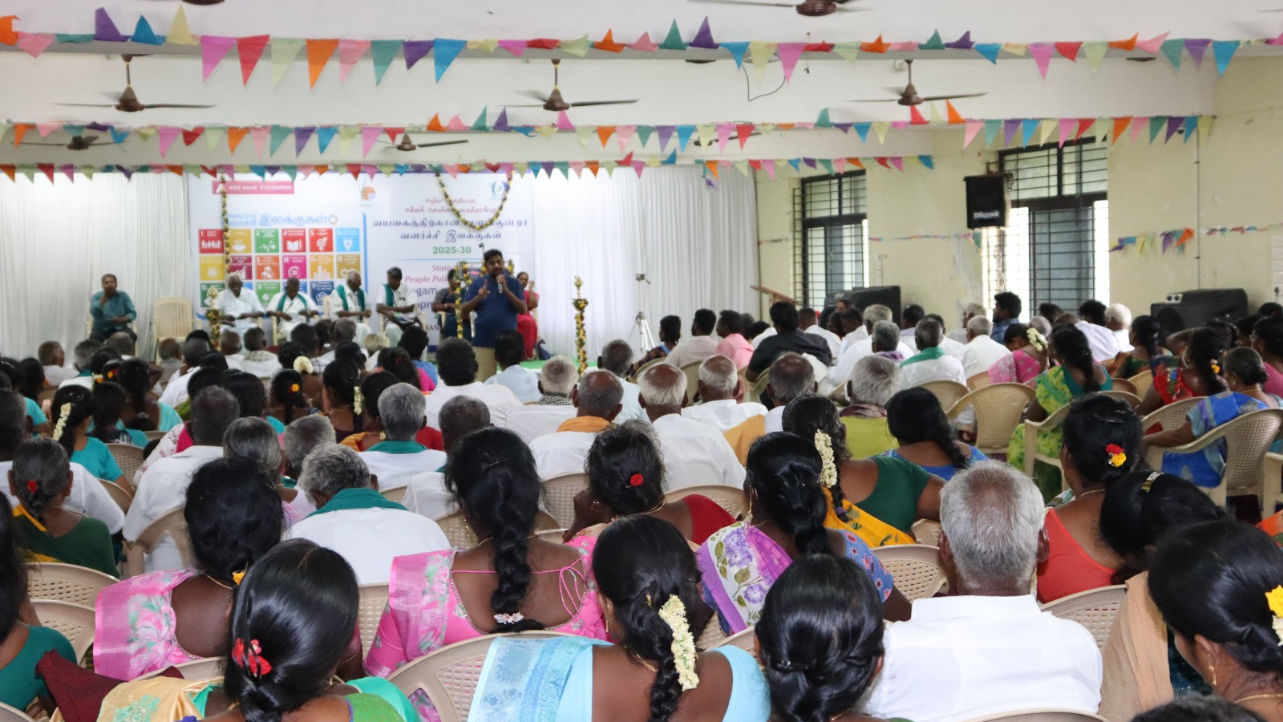
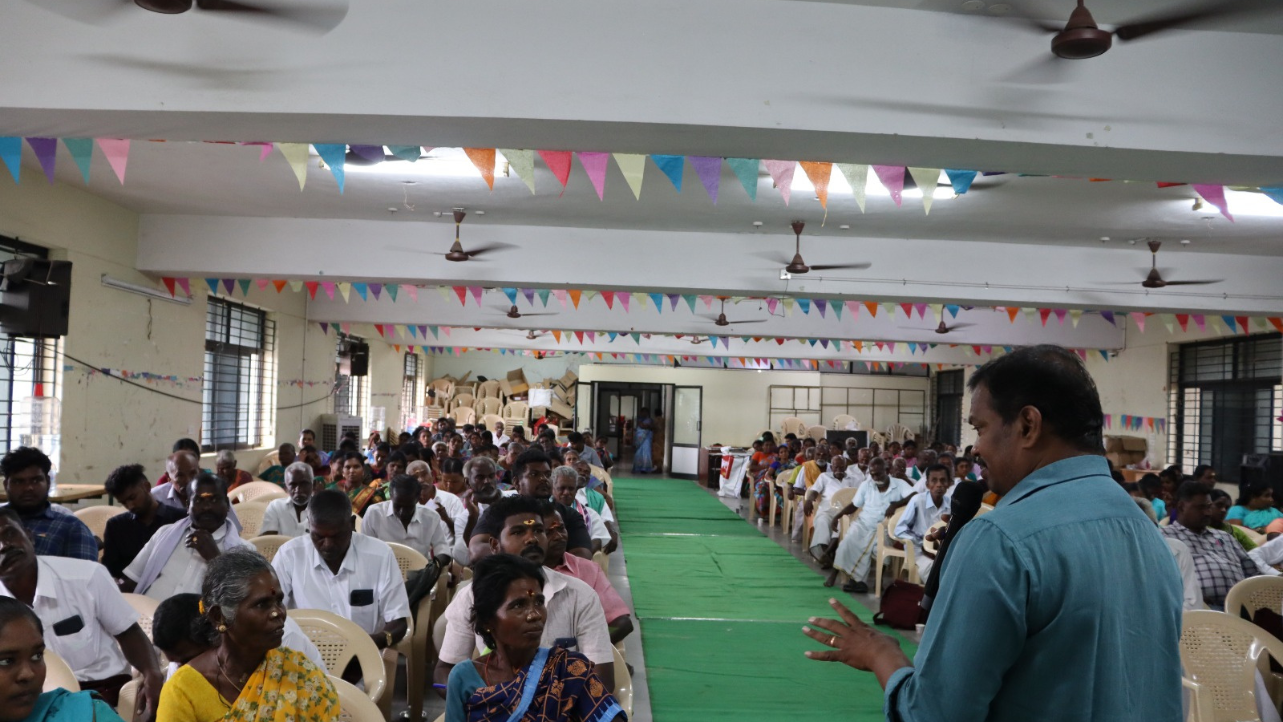
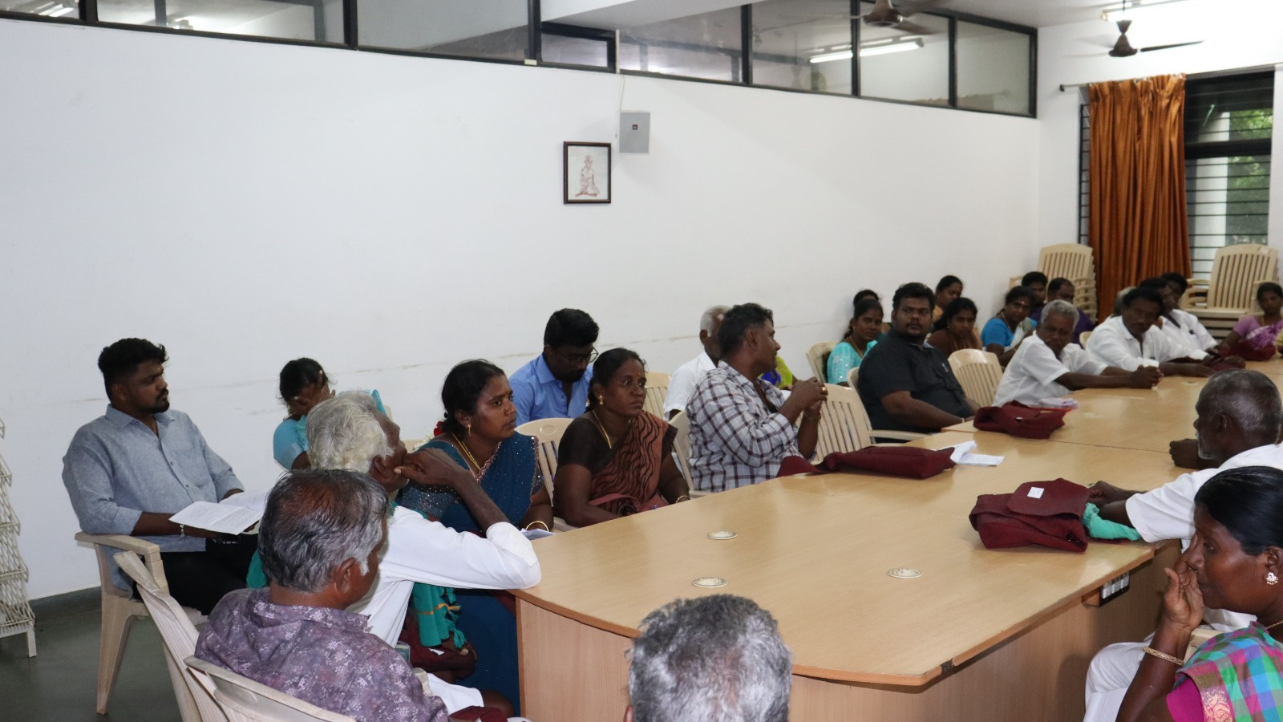
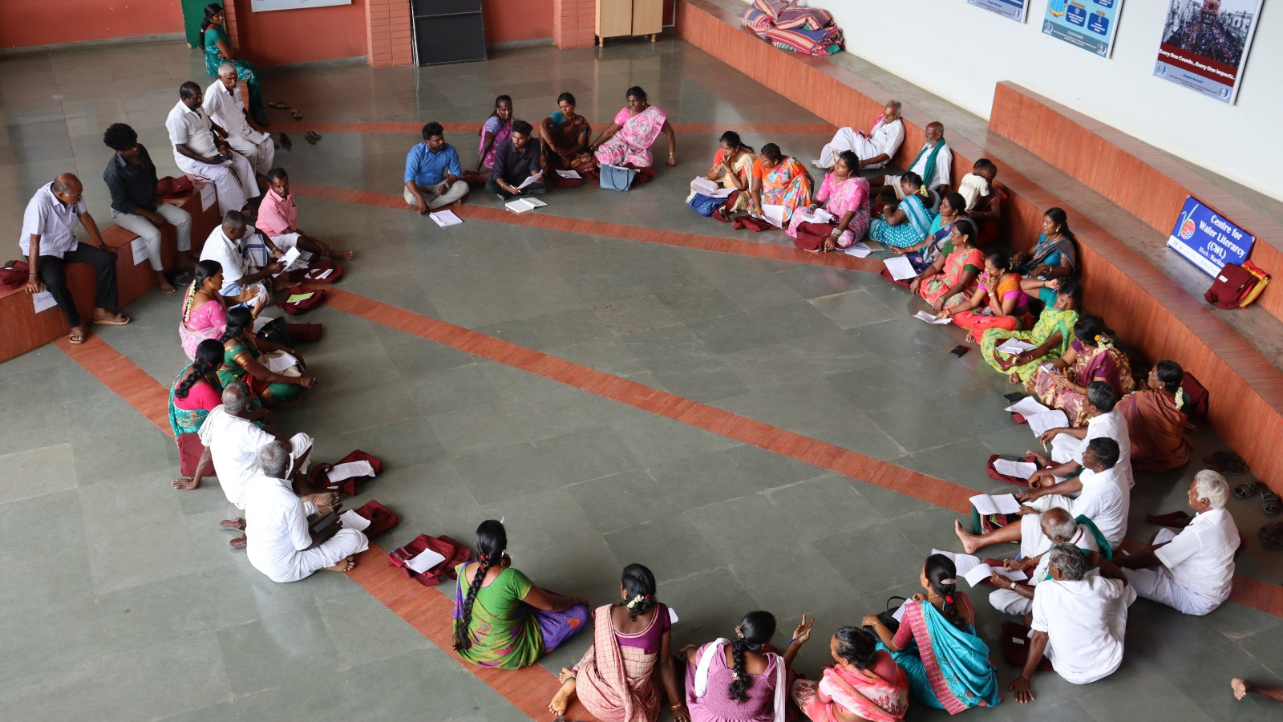
Recognizing the importance of these connections, the DHAN Vayalagam Tank Federation (DVTF) organized a State-level Community Workshop on June 25, 2025, at DHAN's Central Office. The goal was to educate community leaders and functionaries on how their daily activities relate to the SDGs. It was also an opportunity to combine our efforts across various SDG dimensions.
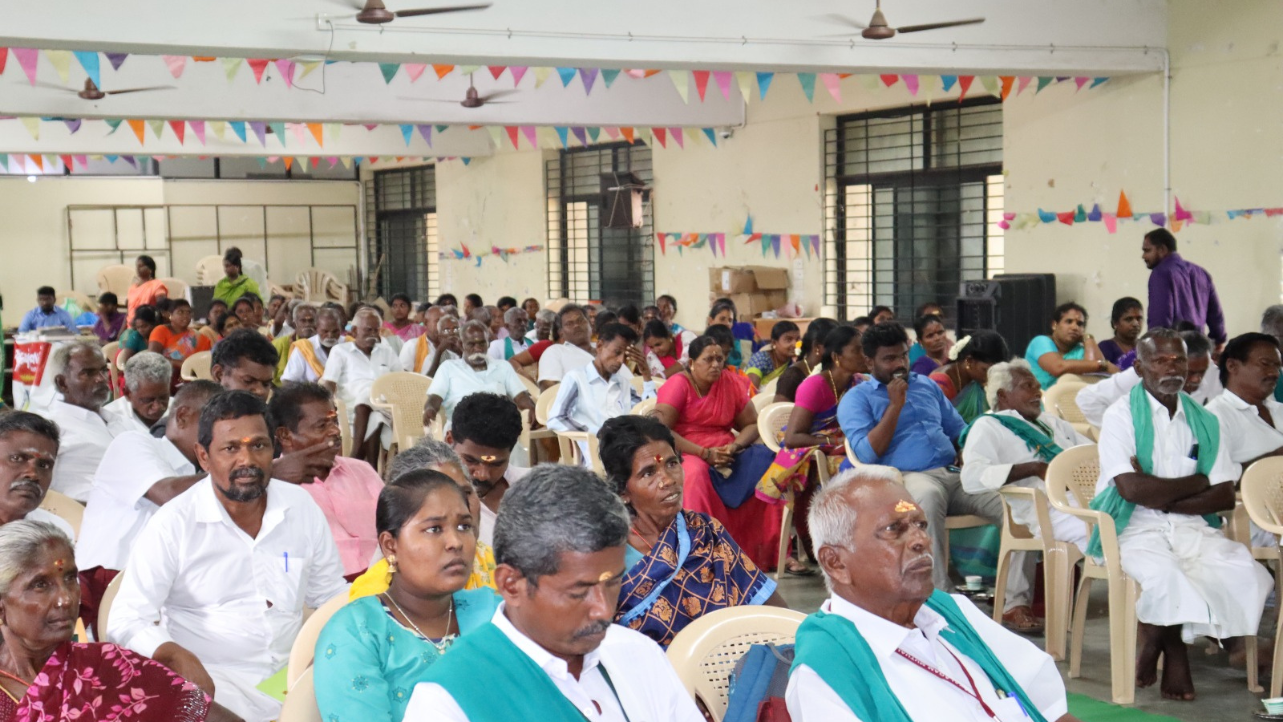
Around 250 community leaders and functionaries from Vayalagam regions across Tamil Nadu attended the workshop, which DVTF coordinated. The DHAN Centre for Policy and Planning team collaborated with DVTF to enhance the workshop's processes. The insights shared by participants confirmed that Vayalagam's work is deeply connected to all the SDGs. DHAN's Executive Director encouraged participants to continue their good work, emphasizing the importance of documentation and sharing their experiences with partners.
The event concluded with declarations outlining Vayalagam's focus for each SDG and a commitment to share the learnings with all Vayalagam farmers at the field level.
Declarations
In the upcoming Federation EC meetings, training needs to be given related to SDGs and Vayalagam. In July, Cascade based, sub basin and basin association meetings, Next 5 years plan based on SDG has to be discussed and detailed plan has to be arrived. This plan needs to be compiled and converted into compendium and to be released during the upcoming Madurai Symposium event.
Event Photos
SDG Declarations
1) No poverty
1. Data needs to be collected about the members below poverty and disadvantaged communities. Specific detailed plan needs to be prepared and implemented to bring them out of poverty.
2) Zero Hunger
1. Small and marginal farmers have to be trained in sustainable agriculture and irrigation practices to increase productivity. Best practices needs to be documented, trained and enable people to achieve nutritional security.
2. Native seeds have to be selected and stored. Proper seed bank has to be established. Proper training needs to be given. Good quality seeds producing farmers have to be identified and collected. Steps to be taken to ensure that seeds are available for them at regional level.
3) Good health and well-being
1. Kitchen garden in all homes to be encouraged. Vegetable / fruits cultivation in the public land have to be encouraged and productivity needs to be increased, thereby ensuring the nutritional security.
2. Farm pond and irrigation tank fish rearing needs to be encouraged especially among our members in turn helps them to consume more protein-based diet.
4) Quality education
1. Proper safe drinking water infrastructure needs to be ensured in all public schools in the working villages.
2. Water connection has to be ensured to all households so that the girls / children who spent time in water collection sacrificing their education / study time.
3. Block wise evening tuition centres have to be established.
5) Gender Equality
1. 2/5th of the leadership roles in all Vayalagam based association has to be ensured as women members
2. Irrigation tank and ooranies have to be made more accessible to women (ex: ensuring staircase/ ghats structure to make it easy for women to access it)
3. Agriculture based Technology and machinery has to be made women friendly. Pilots and field research in this regard to be explored.
4. Model vayalagam has to be created where women members have to have their names in the records and ownership (full/shared) of the agriculture lands.
6) Clean Water and Sanitation
1. To ensure safe drinking water from Ooranies, each village must ensure proper safety restrictions protecting the water quality.
2. Awareness related to usage of bio sand filter for safe drinking water have to be initiated by Vayalagams
3. Open defecation has to be stopped. Bank linkages for loans to build their toilet have to be encouraged.
4. Sewage water from the village should not drain into the water bodies. Waste water has to be properly recycled and reused. Effective interventions at village level have to be taken to address the issue.
7) Affordable and Clean Energy
1. Piloting the intervention of building solar panels in the water spread area in few irrigation tanks have to be rolled out.
2. Schemes and interventions focusing on Vayalagam members to use solar based machines and agri equipollents have to be shared with them
8) Decent Work and Economic growth
1. Through FPOs, the standard of living and economy of the farmers have to be improved.
9) Reduced Inequalities
1. Equality to be ensured in the utilization of the natural resources like water resources of the village. New and revived Water managers system has to be initiated.
2. Encroached land in the water bodies have to be reclaimed. The reclaimed land have to be utilized for public use for all and especially landless in the village.
10) Responsible consumption and production
1. Profitable Organic agriculture and farming practices have to be documented, farmers to be trained and then help them in marketing
2. Through FPO, we need to have effective marketing practices
3. Through centre for water literacy, awareness about virtual water to be given
11) Climate Action
1. Every federation wise, climate smart resilience practices have to be documented and farmers to be given training
2. Resilience centres have to establish in all federation and enable the farmers in climate resilient practices
12) Life on Land
1. Sacred grooves in the villages have to be conserved. Encroachments in the sacred groove has to be removed, invasive species needs to be removed and native trees have to be planted.
2. Sustainable grazing land have to be protected
3. Soil erosion resistant interventions have to be implemented through MGNERGA.
13) Peace, Justice and Strong institution
1. To keep all the vayalagams vibrant and active, all leaders have to be trained, monthly planning and implementation have to be done.
2. Annual subscription, revenue generation through commons using usufruct rights and local resource mobilization have to be done.
14) Partnerships for the Goals
1. Vayalgams needs to collaborate with government institutions, private development institutions, banks and all stakeholders to ensure the sustainability
2. Regional level quarterly plans and policy seminars, development dialogue have to be initiated.
Comments