
Apr - Jun 2025
www.dhan.orgGuardians of Water: Life journeys of Vayalagam Leaders
Journey of Mr K Gandhi
At 86, most people slow down. But not Mr. Gandhi of Vellinipatti village of Madurai district, Tamil Nadu. On the day we were scheduled to meet him, we had planned to visit him at his home, assuming it would be difficult for him to walk. Instead, we found him already waiting at the village entrance, cane in hand and a warm smile on his face. That single gesture said more than words — it reflected his humility, strength, and unwavering commitment to his community.
Born into a poor agricultural family with just 80 cents of land and a few livestock, Mr. Gandhi grew up with limited access to formal education. He attended a small village school where one teacher taught basic lessons for two rupees. Despite not completing school, he developed a deep love for knowledge through self-learning. He read the Ramayana, Mahabharata, and several other books, and firmly believed that real education comes from the field, not the classroom.
As a boy, he balanced studies with labor. During one such job repairing a motor in a well, he suffered a serious accident. Yet, he remained undeterred. Over time, he became deeply involved in social and community activities in the village. In 1993, a devastating flood broke the bund of the tank cascade system in his village and surrounding villages, inundating the agricultural fields and leaving the farmers in distress. Mr. Gandhi and his fellow villagers went from one government office to another, despite many being unable to read or write.
Rather than wait for help, they mobilized the community. they collected ₹2 per acre from the farmers, raising ₹8,000 from 40 acres. They added another ₹2,000 by selling Prosopis juliflora wood, which previously went to the Panchayat. With ₹10,000 in hand, they rehabilitated the bund temporarily.
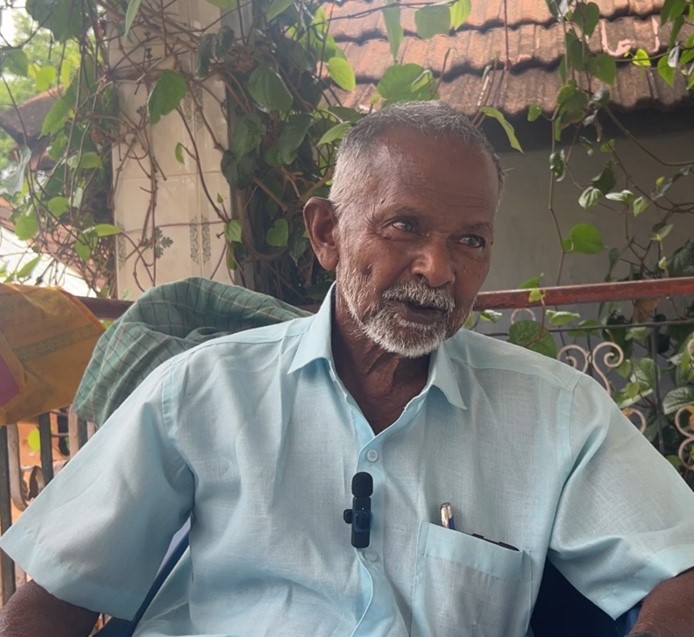
It was around this time that the Sarvodaya team, who were active in the village, suggested inviting PRADAN, a development organization, to assess the situation. When the team arrived, Mr. Gandhi and others explained the status of the tanks. He remembered sharing to the team that “The sluice stands like King Vikramaditya’s throne, but the bund is broken.” The team laughed and continued listening to the story.
The visit laid the groundwork for something greater. DHAN Foundation, with support from DRDA, took up the tank restoration project. A community well with an oil motor was set up to supply water during dry seasons. Mr. Gandhi managed this system with discipline. No one could access water without paying their dues — not even close friends or relatives. He maintained meticulous records and ensured full transparency in all transactions.
His commitment and documentation attracted the attention of the then District Collector, Mr. Kasi Viswanathan. When he visited the tank and saw Mr. Gandhi’s detailed accounts, he publicly appreciated his work and highlighted the village as a model for others. Inspired by this success, Mr. Gandhi also led the renovation of the Oorani, the village’s drinking water pond.
He recalled with pride an event where around 400 government officials and local leaders visited the village to see the tank restoration efforts. Mr. Gandhi played a central role, earning respect from every department present. In 2000, DHAN, with support from CAPART, planted 80 tamarind trees on the bund and initiated a ₹10,000 fixed deposit — half of which came from the villagers. Mr. Gandhi and others took care of the trees, ensuring they flourished.
Further support from Axis Bank enabled them to strengthen the sluice, bund, and surplus channel. After seven years, the impact became visible. The village began auctioning tamarind harvests, generating revenue. The community also earned income from the well water. Today, the federation holds ₹5.8 lakh as a fixed deposit — ensuring that they can independently manage all maintenance and future repairs.
Throughout the years, Mr. Gandhi has served in many roles — as a member, treasurer, and executive committee member of the Vayalagam. His honesty and discipline remain unmatched. He personally covers travel expenses for all his visits and ensures that no public money is spent wastefully.
When asked about his concerns for the future, he became emotional. He shared that the younger generation is losing interest in agriculture. Many youth from his village have gone abroad for labor jobs. He fears that without them, there will be no one left to continue the legacy of tank conservation or farming — a concern that echoes in many rural communities across the country.
Despite these worries, Mr. Gandhi continues to stay involved. He regularly attends training sessions by DHAN, grievance meetings, and all village events. With his dedication and hard work, he purchased 2.5 acres of land and helped his family thrive. Today, his son and four daughters are all married and settled, and he remains a pillar of support for them and the village.
Mr. Gandhi’s story is not just one of tank restoration or community mobilization. It is a story of integrity, commitment, and grassroots leadership — a reminder that real change begins with people who care enough to act. His legacy will continue to inspire long after the tanks are full and the trees bear fruit.
Comments