Apr - Jun 2025
www.dhan.orgUrban Waterbodies and Greywater: Embracing Nature-Based Solutions in Peri-Urban Agriculture
Insights from Vizag’s Constructed Wetland Intervention
In today’s rapidly urbanizing world, cities have become both consumers and producers of water — consuming freshwater for domestic and industrial needs, and producing massive volumes of greywater and sewage in return. In India alone, over 72,000 MLD (million liters per day) of municipal wastewater is generated across Class I cities and Class II towns, yet only about 30% is treated before being discharged into the environment (CPCB, 2022). Urban and peri-urban waterbodies — once pristine sources of irrigation and biodiversity — are now threatened by the unchecked inflow of untreated greywater. This is primarily due to inadequate infrastructure, lack of decentralized wastewater management, and the continued expansion of urban settlements. Consequently, irrigation tanks, ponds, and open channels often serve as the unintended endpoints of wastewater discharge.
At DHAN Foundation’s Centre for Urban Water Resources, our approach is grounded in practicality, ecology, and community engagement. We recognize that while the ultimate policy goal should be 100% wastewater treatment preferably through Nature based solution/ decentralised solutions like decentralized systems like DEWATS (Decentralized Wastewater Treatment Systems), interim solutions are urgently required — especially to support vulnerable urban and peri-urban farmers relying on these tanks for irrigation.
A Working Model from Visakhapatnam
In the bustling urban landscape of Visakhapatnam, we are piloting a nature-based greywater treatment model tailored for urban waterbodies of significant size (20–25 acres). This model includes a small stabilization pond functioning as a constructed wetland, strategically positioned at the inlet of the tank to intercept and treat greywater before it enters the main irrigation system.
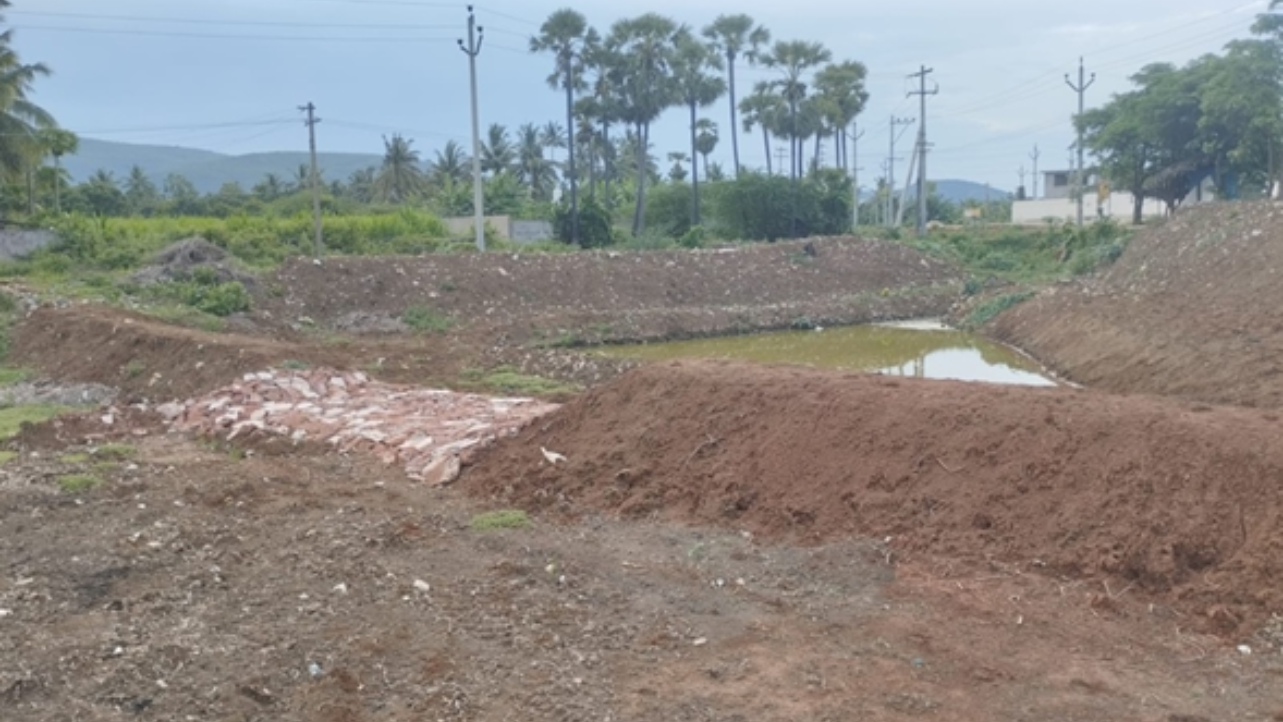
Our recent work at Pothivani Cheruvu, a 20-acre irrigation tank nestled in a peri-urban area, illustrates this model in action. A 0.5-acre constructed wetland, planted with Canna indica — a native species known for its high nutrient uptake — serves as the first point of contact for incoming greywater. The setup comprises:
- A stabilization pond built over the tank's dead storage area, ensuring no disruption to usable water levels.
- Engineered flow alignment to avoid any risk of water backflow.
- Plant-based remediation to absorb nitrogen, phosphates, and organic loads.
Initially, the Pothivani cheruvu Vayalagam members expressed concerns about potential backflow and water stagnation. However, through on-site level checks and demonstration of outlet widths matching the inlet channel, confidence in the system grew — paving the way for broader acceptance and possible replication.
Why It Matters
This micro-level intervention is not an endorsement of greywater entry into irrigation systems. Instead, it is a "survival solution" for peri-urban communities that have little choice but to coexist with wastewater inflows. Without such measures, water quality deteriorates, impacting crop yields, soil health, and human well-being.
Moreover, these solutions align with national and global sustainability goals. Nature-based water treatment is cost-effective, scalable, and contributes to climate resilience, public health, and livelihood protection — especially in underserved areas.
Looking Ahead
The potential for scaling this model across other Vayalagam sites is immense, particularly in regions where infrastructure gaps persist. Our centre remains committed to:
- Advocating for policy-level recognition of decentralized treatment systems
- Promoting community-led water governance
- Supporting practical models that bridge the gap between urban wastewater realities and sustainable rural-urban transitions
In a time when urban sewage is increasingly dictating the fate of rural water resources, solutions must be local, ecological, and inclusive. Pothivani Cheruvu offers just one example of how collective will and smart design can transform a polluted inlet into a source of renewal.
Comments