
1. The Changing Landscape of Professionalism
In a world shaped by rapid technological advances, shifting social structures, and growing emotional strain, professionals are not only expected to perform but to lead with clarity, resilience, and integrity. The modern workplace is no longer just about competence—it is about character. And increasingly, yoga is emerging as a vital compass for those seeking both personal and professional excellence.
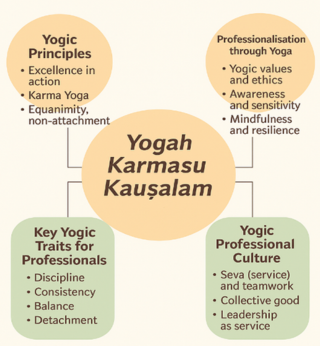
Traditionally viewed as a path to wellness, yoga is now being reimagined as a philosophy that speaks to the heart of leadership, collaboration, and institutional culture. Its relevance goes beyond stress relief or physical fitness; it offers a holistic framework to align the inner world of thought and feeling with the outer world of action and service. The Bhagavad Gita encapsulates this idea in the phrase “Yogaḥ karmasu kauśalam,” or “Yoga is skill in action.” This insight positions yoga not just as a spiritual pursuit but as a blueprint for ethical and effective professional conduct.
2. Yoga as Inner Alignment in a Fragmented World
In professional spaces where ambiguity, burnout, and fragmented purpose are common, yoga brings the promise of alignment—between intention and execution, values and outcomes. Research supports this. A study conducted by Genovese and Fondran in 2017 analysed yoga practitioners and found that with sustained practice, individuals evolve from externally motivated behaviour toward internal clarity, self-regulation, and spiritual grounding. This transformation mirrors what is often lacking in leadership development today: the journey from performance to purpose.
3. Personalised Yoga for Professional Transformation
What makes yoga particularly powerful in professional development is its capacity for personalisation. Unlike one-size-fits-all productivity tools, yoga respects the uniqueness of each individual’s psychological and emotional landscape. For instance, those new to the practice, often driven by external stress or disconnection, benefit from foundational practices like breath awareness and simple postures. Others, more performance-oriented, find structure and rhythm in group routines. And those seeking deeper transformation gravitate toward reflective practices, inner resolve (Sankalpa), and the philosophy of Karma Yoga. This cluster-based approach has profound relevance for human resource development, coaching, and executive leadership programs.
Case Study – A Life-Changing Yoga Experience at The DHAN Academy
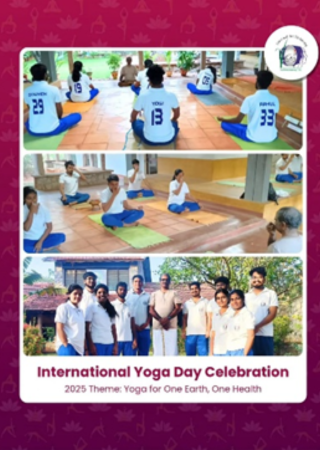
On International Yoga Day 2025, students at The DHAN Academy underwent a deep reflective yoga session guided by faculty. The session included Jal Neti, Sutra Neti, Kapal Bhati, and focused meditation. A participant noted: “This was the first time I saw yoga so deeply… it’s a science of cleansing and inner strength.” Students reported a visible shift in breath awareness, discipline, and collective support. What made the experience transformative was the faculty’s ability to personalise instruction and connect it to everyday realities. The session illustrated how even novice practitioners (Cluster C) can transition to deeper awareness with meaningful facilitation - Yogesh (PDM 23)
4. Embedding Yogic Values into Organisational DNA
Institutionalising yogic principles brings another layer of significance. In environments striving for value-based excellence, yoga provides a vocabulary and structure for aligning individual behaviours with organisational values. Principles such as Abhyāsa (discipline) and Vairāgya (detachment) encourage steady effort without ego-driven obsession. Samatva (equanimity) allows professionals to remain centred amidst success and setbacks. Shraddhā (faith) and Titikṣā (endurance) build long-term commitment and emotional resilience. These are not abstract ideals; they translate into professional traits like emotional maturity, collaboration, ethical action, and purposeful innovation.
| Yogic Principle | Professional Trait | Linked Institutional Values |
|---|---|---|
| Abhyasa | Consistency, mastery | Excellence, Grassroots Action |
| Vairagya | Ego-detachment, balance | Self-Regulation, Excellence |
| Samatva | Emotional maturity, objectivity | Collaboration, Self-Regulation, Innovation |
| Shraddha | Vision-aligned action | Enabling, Innovation |
| Titiksa | Perseverance under pressure | Grassroots Action, Enabling, Innovation |
5. From Theory to Organisational Practice
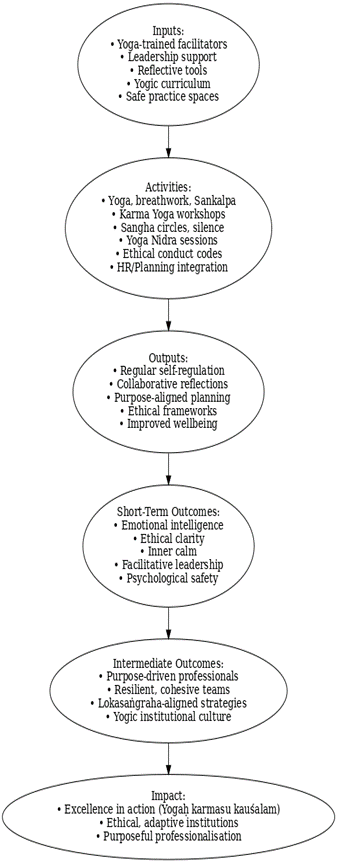
The shift from theory to practice happens through thoughtful integration. Institutions can offer Karma Yoga workshops that explore service-oriented leadership. They can schedule Yoga Nidra sessions to help staff reset mentally. Codes of conduct can be inspired by the ethical foundation of yogic teachings—truthfulness, non-excess, and self-discipline. Strategic planning can be infused with the spirit of Sankalpa, aligning individual intentions with organisational missions. In this way, yoga becomes more than a wellness activity—it becomes a way of organising thought, behaviour, and institutional life.
6. Leadership as Seva: Leading from Within
Leadership, when viewed through the lens of yoga, takes on a new dimension. It is no longer a position of command but a role of service—Seva. Leaders grounded in yogic values lead from within, drawing strength from humility (Amanitvam), contentment (Santosha), and discernment (Viveka). Rather than micromanage or dominate, they create spaces for others to grow, make decisions with conscience, and remain calm during uncertainty. Such leaders do not merely instruct—they embody stability, especially in moments of crisis. Their presence generates trust, psychological safety, and collective confidence.
7. Sangha: Nurturing a Culture of Collective Growth
Alongside leadership, the culture of collaboration also benefits when inspired by yoga. In the yogic tradition, the concept of Sangha—a community of shared practice—emphasises learning, reflection, and mutual respect. In organisational life, this takes shape through shared rituals like moments of silence, breathing together, or regular team reflections. These simple yet powerful practices break down hierarchies, foster empathy, and replace competition with co-creation. Over time, workplaces evolve into ecosystems of connection where people feel seen, not just for what they do, but for who they are.
8. Lokasaṅgraha: Expanding Purpose Beyond the Self
On a broader scale, yoga introduces the principle of Lokasaṅgraha, or action for the collective good. Institutions rooted in this value design projects that benefit not just themselves but the communities they serve. Stakeholders are seen as partners, not just beneficiaries. Social relevance becomes as important as profitability. Employees are encouraged to volunteer, co-design solutions with communities, and integrate environmental stewardship into their roles. When the purpose expands beyond the self, a deeper sense of ownership and pride emerges.
9. Micro-Practices for Everyday Awareness
In the day-to-day, this philosophy is reinforced through small, intentional habits. Starting meetings with a moment of silence, taking mindful breaks, or setting shared intentions at the beginning of a project are micro-practices that build institutional mindfulness. These practices, subtle though they are, have a cumulative effect: reducing burnout, encouraging reflection, and nurturing collective energy.
10. Yoga in the Digital Age: A Human Compass
As we enter an age dominated by algorithms, automation, and artificial intelligence, the need for inner clarity becomes even more urgent. Technology optimises how we act, but not why we act. While machines can process data and automate decisions, they cannot offer reflection, empathy, or ethical judgment. Yoga fills this gap. It nurtures self-awareness, purpose orientation, and emotional intelligence—traits that are irreplaceable in human leadership. Studies show that long-term yoga practitioners develop these very qualities: intrinsic motivation, emotional maturity, and spiritual awareness. These are the new success markers in an age where technical skills are abundant but meaning is scarce.
Rather than resist technology, yoga offers a counterbalance. Where data overwhelms, breath brings clarity. Where speed narrows vision, intention widens it. Where isolation creeps in, community practice restores connection. Leading institutions around the world have already begun to recognise this, integrating mindfulness and yoga into leadership development, with measurable gains in empathy, focus, and ethical conduct.
11. The Way Forward: A Conscious Path to Professional Excellence
The way forward is clear. In an increasingly mechanised world, yoga invites us to be more human. When organisations embed its principles—not just in practice rooms, but in planning sessions, team culture, and fieldwork—they create spaces where people do not merely perform, but thrive. Professional excellence, then, is no longer a product of pressure, but a reflection of inner purpose.
Yoga, ultimately, reminds us that excellence is not an act, but a state of being. By cultivating awareness, serving with humility, and growing with intention, both individuals and institutions can redefine what it means to succeed in the 21st century.
References