Issue 5: Oct - Dec 2025
www.vf.dhan.orgReviving Illani Tank and Transforming a Small Farmer’s Life through Vayalagam
Introduction: Why Vayalagam Matters
Water commons are lifelines for rural livelihoods. Tanks and ponds not only support agriculture but also sustain ecosystems and community wellbeing. However, many of these commons suffer from neglect, fragmented ownership, and unsustainable interventions. External investments alone cannot ensure long-term impact unless communities themselves become custodians of these resources.Recognizing this, DHAN Foundation promotes People’s Institutions called Vayalagams at village or tank level to ensure collective ownership, sustainable management, and equitable water sharing. These institutions integrate technical, financial, and social interventions to protect water resources for present and future generations.
This case study narrates how the Illani Kanmoi Vayalagam revived Illani Tank in Ponnamaravathi Block and how a small farmer, Mr. M. Velmurugan, moved out of poverty and rebuilt his livelihood through collective action and water security.
Village and Tank Context
Ilanipatti village, under Nallur Panchayat in Ponnamaravathi Block, has 184 households with a population of 508. Agriculture is the primary livelihood, followed by livestock rearing and MGNREGS wage employment. Paddy and groundnut are the dominant crops.The village depends on two tanks – Vellaiyakon Tank and Illani Tank, of which Illani Tank serves the larger command. Managed by the PWD, Illani Tank irrigates about 112 acres benefiting 89 ayacut farmers. Besides irrigation, the tank supports biodiversity, livestock grazing, and groundwater recharge.Over the years, the tank’s performance declined due to a damaged feeder channel, weed infestation, siltation, and improper slope. Although rainfall occurred, the tank failed to store and distribute water effectively. As a result, cultivation reduced drastically, many lands became fallow, and farmers lost confidence in agriculture.
Velmurugan: A Small Farmer at the Crossroads
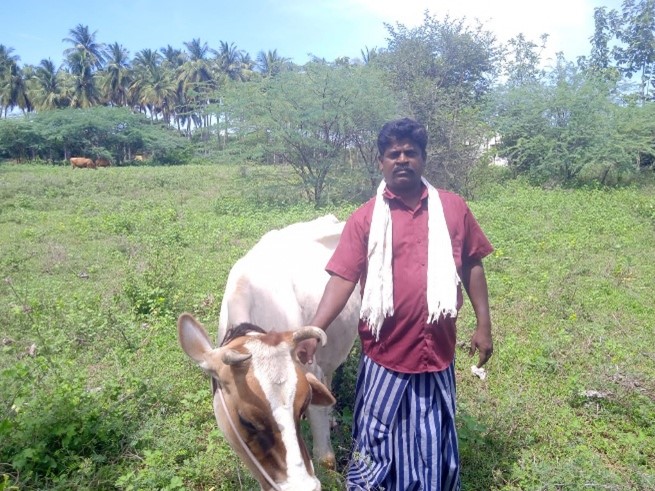
Mr. M. Velmurugan is a small farmer from Ilanipatti who owns about 2 acres of agricultural land. Agriculture is his ancestral occupation and the only livelihood for his family. With children pursuing education, Velmurugan was the sole breadwinner.
Repeated water shortages during critical crop stages pushed him into distress. Nearly 1.5 acres of his land was left fallow as irrigation became unreliable. Like many others, he started working as a daily wage labourer, losing hope in farming.
Before the intervention, his paddy yield averaged only 18 bags per acre, barely covering cultivation costs. Farming had become uncertain, risky, and emotionally exhausting. Velmurugan’s story reflected the condition of many small farmers dependent on Illani Tank.
Pre-Intervention Status of Illani Tank
Illani Tank once played a major role in supporting local agriculture, but its feeder channel had deteriorated badly. It had:
- Reduced depth and width
- Improper slope and waterway alignment
- Bushes and weeds choking the inner channel
- Poor inflow and short stagnation period
Although the tank had undergone desilting earlier, the feeder channel was neglected for nearly eight years. The community lacked funds and institutional strength to address the issue. As a result, only about one-third of the command area was cultivated, and water distribution became uneven and unreliable.
Interventions by Ponnamaravathi Tank Federation
Formation of Illani Kanmoi Vayalagam
During 2021–22, the Ponnamaravathi Tank Federation promoted Illani Kanmoi Vayalagam with 89 members. It was the first organized people’s institution in the village. Gender balance in leadership was ensured, and a Neerkatti (waterman) was placed to manage water distribution. Members were grouped into three AFGs – Mangalanathan, Jothi Vinayagar, and Periyanayagi – strengthening financial inclusion and participation.
Tank Rehabilitation with People’s Investment
Based on farmers’ demand, the Federation supported feeder channel clearance at a cost of Rs.1.6 lakhs. Importantly, the community contributed Rs.40,000, while the rest came from partners. Exposure visits, repeated dialogues, and leadership involvement helped farmers realize that development begins with their own investment.
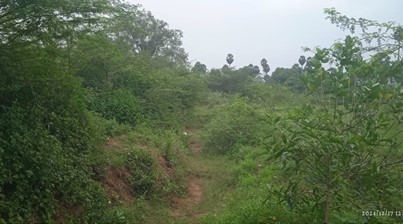
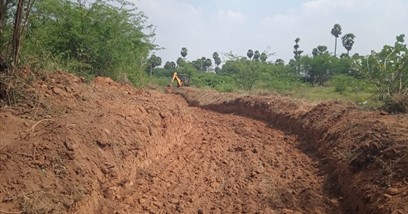
Feeder Channel Before and After
Post-Intervention Impact
Institutional Sustainability: The Vayalagam conducts regular monthly meetings, rotates leadership, strengthens AFG saturation, and manages small repairs from its endowment. The Neerkatti ensures equitable water distribution, making the institution functional and trusted.
Water Augmentation: The intervention helped augment nearly 600 cubic meters of storage. Improved channel flow reduced evaporation losses, increased infiltration, and extended stagnation periods. Later, the association also leveraged MGNREGS renovation works for the tank.
Increased Agricultural Production: Cultivated area increased from 60 acres to 92 acres, bringing 32 acres back to farming. Paddy production increased from 71.3 tons to 145 tons, nearly doubling yields. The incremental value realized was about Rs.11.28 lakhs, restoring farmers’ confidence.
Velmurugan’s Transformation
Mr. Velmurugan describes the Vayalagam intervention as a turning point in his life. Before the feeder channel rehabilitation, he had lost faith in agriculture and left nearly 1.5 acres fallow, working as a daily wage labourer to support his family.
After the Federation restored the feeder channel and strengthened the tank, water reached his fields reliably. During 2023–24 and 2024–25 Rabi seasons, he cultivated paddy (Amman variety) on his land with renewed confidence.
For the first time in his farming life, he harvested 28–29 bags per acre, compared to his earlier experience of only 18 bags per acre. The additional 12–13 bags per acre significantly improved his income. From his 2 acres, he earned about Rs.40,000 additional income in one year alone.
With assured water, Velmurugan also diversified into vegetables such as beans, brinjal, and bhendi during Kharif and summer seasons using seeds provided through the Federation. Bank linkage support of Rs.1 lakh helped him invest in farming, meet health needs, and support his children’s education.
Trainings on organic farming and water management changed his mindset from survival farming to sustainable farming. He now believes that agriculture can be profitable if water security and collective action exist.
Velmurugan actively participates in Vayalagam meetings and advocates for regular tank maintenance through community funds and external linkages. He shares his experience with other farmers, encouraging them to return to agriculture and trust collective institutions. His journey reflects how a small farmer can move out of poverty when water, institutions, and livelihoods converge.
Conclusion
The Illani Kanmoi Vayalagam demonstrates that people’s institutions are the need of the hour for managing water commons sustainably. Infrastructure alone cannot revive agriculture unless communities own, invest, and govern their resources.
The transformation of Illani Tank and the livelihood recovery of Mr. Velmurugan show how collective action, water security, capacity building, and financial linkages can rebuild rural economies. Vayalagams not only restore tanks but also restore hope, dignity, and prosperity among small farmers.
 Facebook
 Instagram
Comments