DHAN Foundation's Ten-Year Journey with the Odisha Millet Mission in Koraput, Odisha
For generations, millets have been more than crops for the tribal communities of Koraput—they have been a source of food, nutrition, culture, and resilience. Yet, changing farming practices, declining productivity, poor market access, and the gradual loss of traditional seed varieties threatened this rich agricultural heritage.
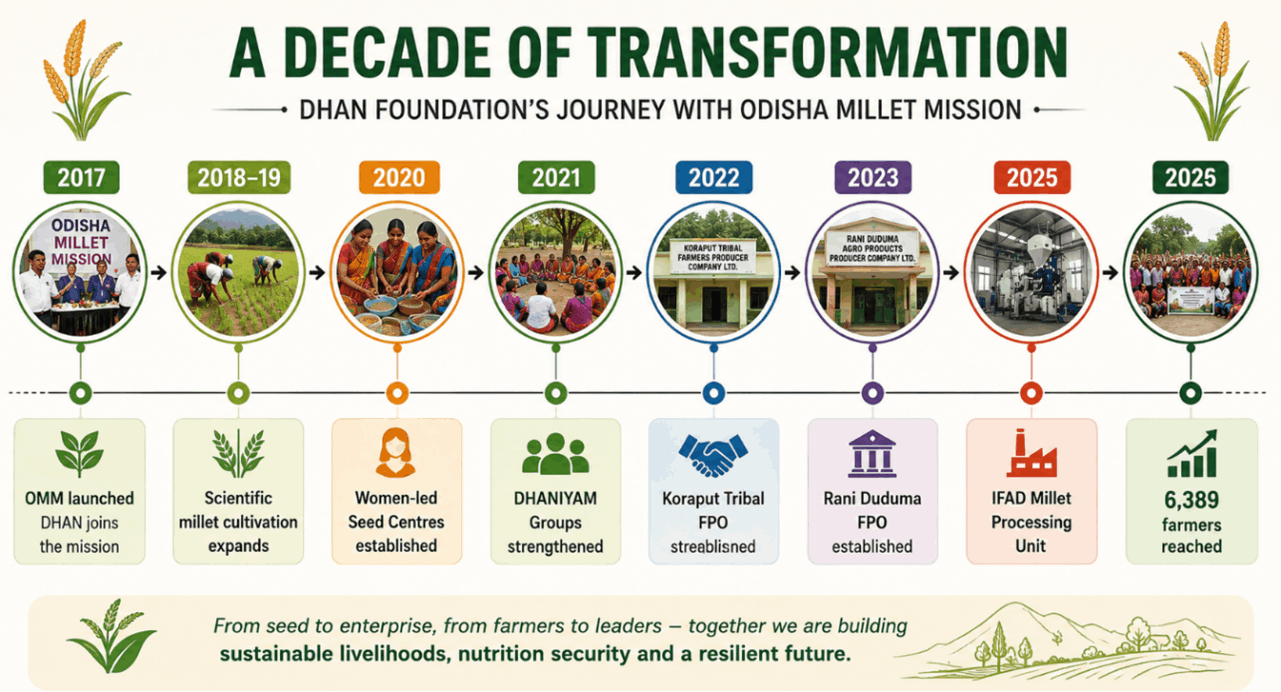
Recognizing the need to restore millets to the centre of tribal livelihoods, the Government of Odisha launched the Odisha Millet Mission (OMM) in 2017. Over the past ten years, DHAN Foundation has partnered with the Mission in the tribal blocks of Semiliguda and Dasamantpur, demonstrating that sustainable agriculture is not achieved through a single intervention but through strengthening the entire millet ecosystem - from seed to market, and from farmers to community-owned enterprises.
1. Expanding Millet Cultivation through Scientific Farming
The first step in the journey was improving millet production. DHAN Foundation introduced scientific cultivation practices such as the System of Millet Intensification (SMI), Line Transplanting (LT), scientific nursery management, seed treatment, moisture conservation, and improved crop management while respecting farmers' traditional knowledge.
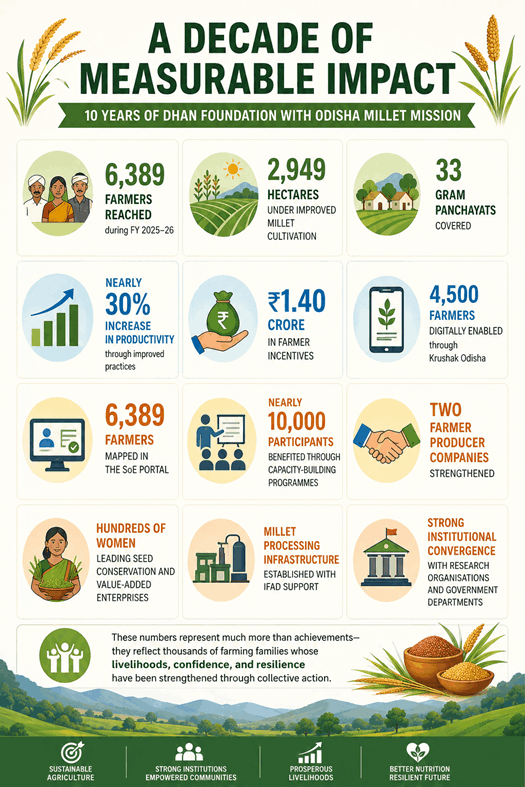
During 2025–26, the programme reached 6,389 tribal farmers across 33 Gram Panchayats, bringing 2,949 hectares under improved millet cultivation. Cumulatively reached 15,000 farmers in the past ten years. Demonstrations covered 2,935 hectares, leading to nearly 30 percent higher productivity compared to conventional broadcasting methods. Farmers also received ₹1.40 crore through Direct Benefit Transfer incentives, encouraging wider adoption of improved cultivation practices. These interventions increased productivity, reduced cultivation costs, and strengthened household food security.
2. Strengthening Seed Systems through Research and Innovation
Reviving millets also meant preserving indigenous biodiversity. Crop Cutting Experiments, Participatory Varietal Trials, Community Biodiversity Demonstrations, and seed production programmes helped identify suitable millet varieties for local conditions. Quality seed production was undertaken on 5 hectares, while Community Managed Seed Centres ensured farmers had timely access to quality seeds. These initiatives strengthened local seed sovereignty and enabled farmers to make informed decisions based on scientific evidence without losing their traditional seed heritage.
Digital innovations have also strengthened programme implementation. The Digital Crop Survey mapped 2,935 hectares of millet fields, while 4,500 farmers updated their records through the Krushak Odisha portal. Additionally, 6,389 farmers were digitally tagged in the State's SoE Portal, ensuring timely access to incentives, crop registration, and government services.
3. Building Farmers' Knowledge and Skills
Technology alone cannot transform agriculture; farmers must have the confidence to use it.
Thousands of farmers, Community Resource Persons, Self-Help Groups, and Farmer Producer Company members participated in regular capacity-building programmes covering millet cultivation, seed production, integrated farming, post-harvest management, crop insurance, organic farming, value addition, and enterprise management. During 2025–26 alone, nearly 10,000 participants benefited from various capacity-building programmes covering improved cultivation, value addition, procurement, nutrition, and enterprise development.
Exposure visits, demonstrations, policy seminars, and millet food festivals helped farmers learn from one another, resulting in significant improvements in productivity, income, and confidence.
4. Creating Strong Community Institutions
One of the defining features of DHAN Foundation's approach has been institution building.
The programme strengthened 85 DHANIYAM Groups and Self-Help Groups, established 6 Community Managed Seed Centres (CMSCs) and 8 Custom Hiring Centres (CHCs), creating strong community-owned systems that continue to serve farmers beyond the project period. CMSCs supported 750 farmers, generating ₹1.4 lakh through seed sales, while CHCs provided farm machinery services to 857 farmers, generating nearly ₹2 lakh through equipment rentals. These institutions have become the backbone of sustainable millet development.
5. Farmer Producer Companies: Linking Farmers to Markets
A major milestone of the Odisha Millet Mission has been the strengthening of Farmer Producer Companies.
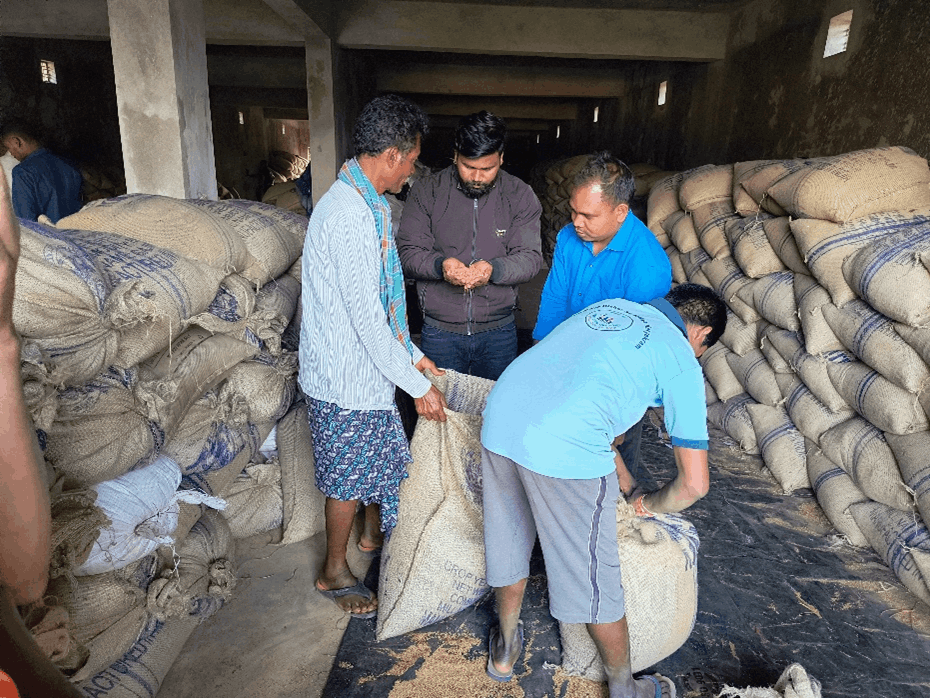
The Koraput Tribal Farmers Producer Company Ltd. (KTFPCL) has grown from only 10 shareholders to 620 shareholders, covering 48 villages. During the 2025 procurement season, it registered 1,058 farmers for MSP procurement, procured 8,250 quintals of ragi worth over ₹4.03 crore, generated business revenue for the FPO, and enabled farmers to earn an additional ₹1.22 crore through assured MSP procurement.
Similarly, the Rani Duduma Agro Products Producer Company Ltd. strengthened procurement and market access for farmers in Semiliguda through MSP registration, crop insurance, and business services. These farmer-owned enterprises have become powerful engines for inclusive rural economic growth.
6. Ensuring Better Prices through MSP Procurement
For tribal farmers, producing more has little meaning without assured markets.
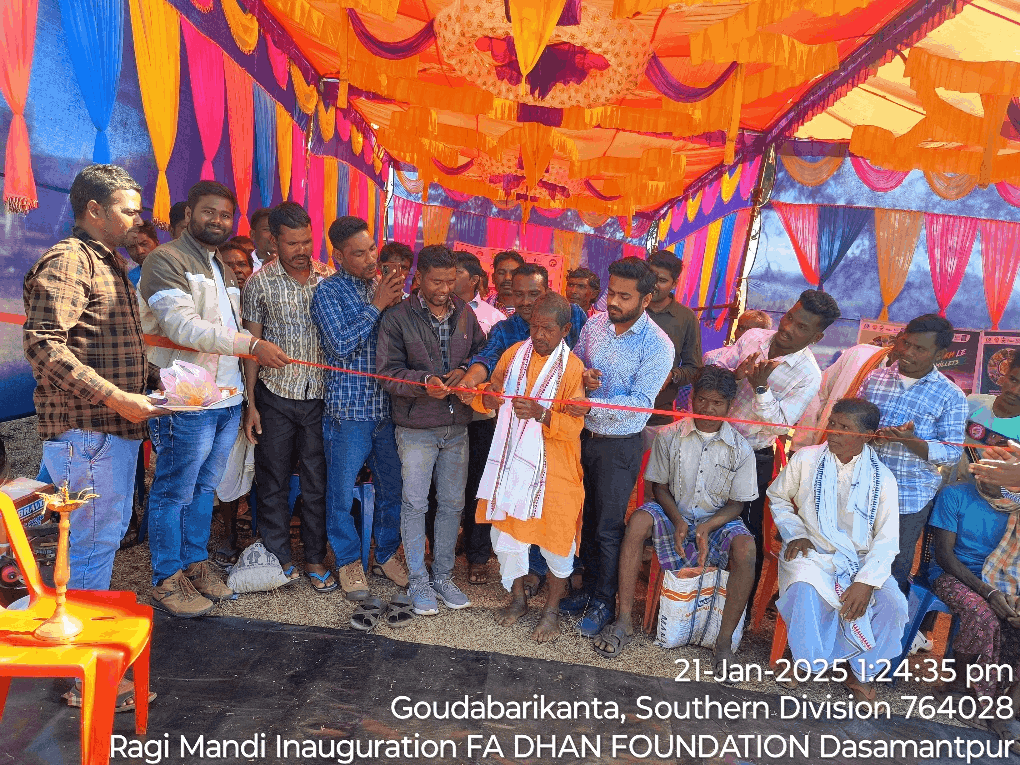
The Odisha Millet Mission ensured that farmers could sell their produce under the Minimum Support Price (MSP) system instead of relying on local traders. This improved price realisation by nearly 25 percent, significantly increasing household income while encouraging farmers to continue millet cultivation. MSP procurement has become one of the strongest incentives for sustaining millet farming across Koraput.
7. Empowering Women through Enterprises
Women have emerged as the face of the millet movement.
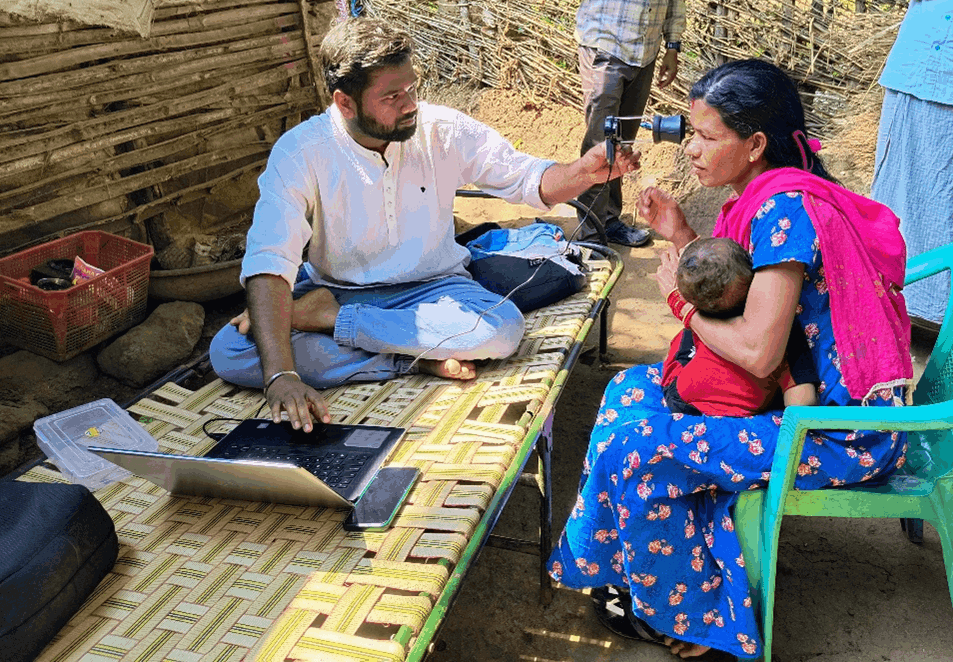
Five Millet Tiffin Centres managed by women's Self-Help Groups have benefited 70 women members, generating more than ₹7.2 lakh in income. Women now lead Community Managed Seed Centres, millet processing units, seed conservation initiatives, and value-added food enterprises. Groups such as Priyadarshini Kalanjiam demonstrate how women are preserving indigenous seed diversity while simultaneously building profitable businesses around millet products. Their leadership has strengthened both household incomes and community nutrition.
8. Adding Value beyond Production
Recognising that income increases when value is retained locally, DHAN Foundation promoted millet processing, branding, packaging, and product development. Women and Farmer Producer Companies now produce millet flour, cookies, murukku, millet mixes, and other nutritious foods.
A landmark achievement has been the IFAD-supported Millet Processing Centre, developed with an investment of ₹32.01 lakh. Once operational, it is expected to benefit more than 700 farmers, increase farmers' income by at least 15 percent, reduce post-harvest losses, and create employment opportunities for rural youth and women.
9. Promoting Climate-Resilient Agriculture and Nutrition
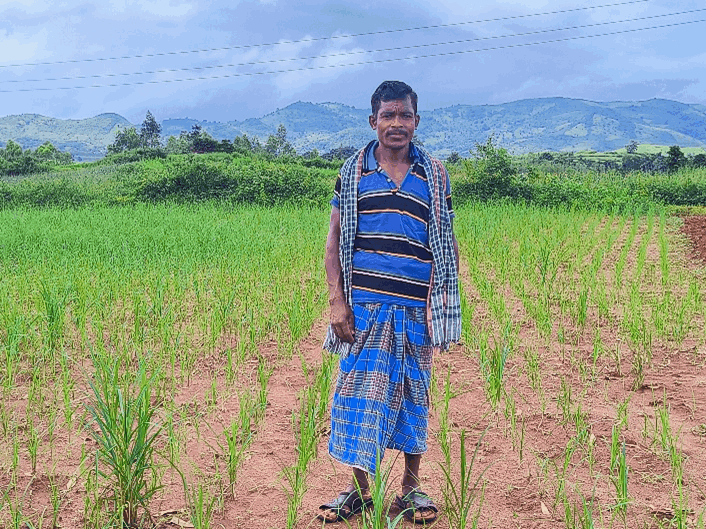
Millets are naturally drought-tolerant and ideally suited to Koraput's rainfed farming systems.
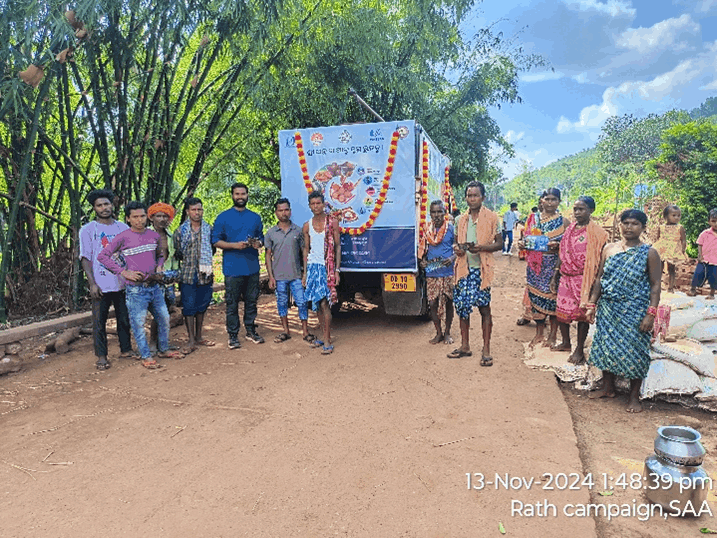
The programme promoted sustainable agriculture through moisture conservation, organic nutrient management, biodiversity conservation, and indigenous seed preservation. Millet Tiffin Centres, nutrition awareness programmes, and community food festivals also encouraged households to bring nutritious millet foods back to their dining tables.
The programme even extended its social impact by distributing 720 nutrition kits to tuberculosis patients through community institutions, demonstrating how millet-based interventions can contribute to public health alongside agriculture.
10. A Decade of Lasting Impact
The journey of DHAN Foundation under the Odisha Millet Mission is not simply the story of expanding millet cultivation. It is the story of building an integrated millet value chain that combines improved production, research, farmer capacity building, community institutions, seed systems, women-led enterprises, Farmer Producer Companies, MSP procurement, processing infrastructure, climate resilience, nutrition, and market access.
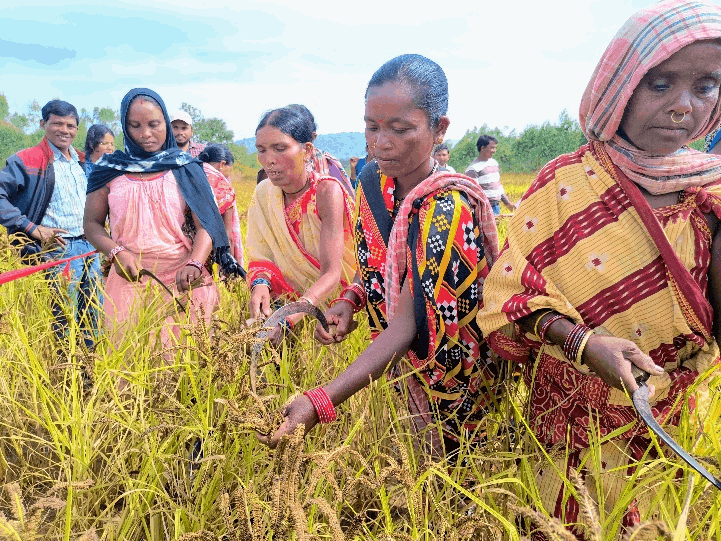
Today, thousands of tribal farmers cultivate millets with greater confidence. Women lead enterprises that generate income and improve nutrition. Community institutions manage seeds, machinery, and local businesses. Farmer Producer Companies connect producers to profitable markets. Processing centres create value closer to villages. Together, these achievements have transformed millets from a subsistence crop into a driver of sustainable livelihoods.
After ten years of partnership, the Odisha Millet Mission and DHAN Foundation have demonstrated that when communities are empowered and every component of the value chain is strengthened, millets can become a powerful pathway towards prosperity, nutrition, climate resilience, and inclusive rural development.