
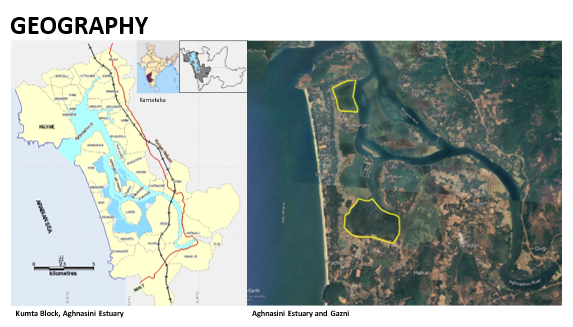
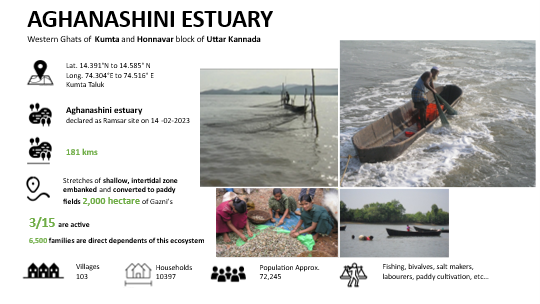
Uttar Karnataka district is along the western coast of India under the Karnataka State, is endowed with a diverse range of ecosystems that include the lush Western Ghat mountains, fertile plains, and an extensive coastal stretch along the Arabian Sea. Though smaller in mangrove coverage compared to other states like West Bengal or Odisha, Karnataka harbors ecologically significant mangrove ecosystems, particularly along the Uttara Kannada coast — in estuaries, tidal creeks, and backwaters near Kumta, Honnavar, and Karwar blocks of Uttar Kannada District.
These mangrove forests play a crucial role in supporting the ecological balance of the coastal zone. They stabilize shorelines, reduce erosion, and absorb the impact of storms and tidal surges, acting as natural buffers that protect coastal communities. Moreover, mangroves support nutrient cycling, serve as nursery grounds for fish, prawns, and crabs, and provide habitat for migratory birds and reptiles, thereby sustaining both biodiversity and livelihoods.
In the Aghanashini and Kali estuaries, mangroves form an essential part of the estuarine ecosystem, supporting rich biodiversity and the traditional livelihoods of local fishing communities. Dominant species such as Avicennia marina, Rhizophora mucronata, Sonneratia apetala, and Bruguiera cylindrica thrive here, along with salt-tolerant associates like Suaeda maritima. These areas not only enhance the region’s biological wealth but also play a vital role in carbon sequestration, contributing to climate regulation and global efforts against climate change.
Mangroves have also proven to be an effective, nature-based solution for disaster risk reduction (DRR). During events such as the 2004 Indian Ocean tsunami, coastal regions shielded by mangrove belts experienced far less damage compared to unprotected zones. By trapping sediments, improving water quality, and acting as carbon sinks, mangroves serve multiple ecosystem services that help both the environment and society.
Beyond their ecological significance, mangroves are deeply intertwined with the socio-economic fabric of coastal Karnataka. They support small-scale fisheries, provide firewood, and honey, and even hold potential for eco-tourism and research. Importantly, these coastal forests underpin the livelihood and food security of many families, while simultaneously offering a low-cost, sustainable defense against coastal disasters. Given their crucial ecological and social roles, the conservation of mangroves in Uttara Kannada is not merely an environmental concern but a developmental priority — essential for biodiversity protection, climate resilience, and sustainable coastal livelihoods.
Despite their immense ecological, economic, and social importance, mangrove forests are among the most threatened ecosystems in the world today. In regions like Uttara Kannada, mangrove areas have been cleared for firewood, charcoal, and timber extraction, and converted for agriculture, aquaculture (particularly shrimp farming), urban expansion, and industrial projects. These activities disrupt the delicate coastal ecosystem, weaken natural buffers against floods and storms, and threaten biodiversity and traditional livelihoods.
The loss of mangrove cover not only diminishes coastal protection and fishery productivity but also accelerates carbon emissions, contributing to global warming. Communities that once relied on mangroves for fishery resources and protection are now facing greater vulnerability to natural disasters, economic instability, and food insecurity. Therefore, it is imperative to start coordinated conservation and restoration strategies that integrate scientific knowledge, community participation, and disaster risk reduction measures.
DHAN’s intervention in resilience building:
DHAN Foundation, with the support of the State Bank of India Foundation (SBIF), has undertaken a detailed study and intervention in Uttara Kannada district, focusing on mangrove conservation and restoration in the estuarine ecosystems. The initiative is being implemented in the Aghanashini estuary and surrounding coastal regions of Kumta and Honnavar, where mangrove forests play a vital role in shoreline protection, fisheries productivity, and sustaining the livelihoods of coastal communities. The project named MERIT – Mangrove Ecosystem Restoration & Integration Transformation, which aims to restore degraded mangrove habitats, enhance community resilience to climate change, and promote sustainable livelihoods through a participatory, community-based approach.
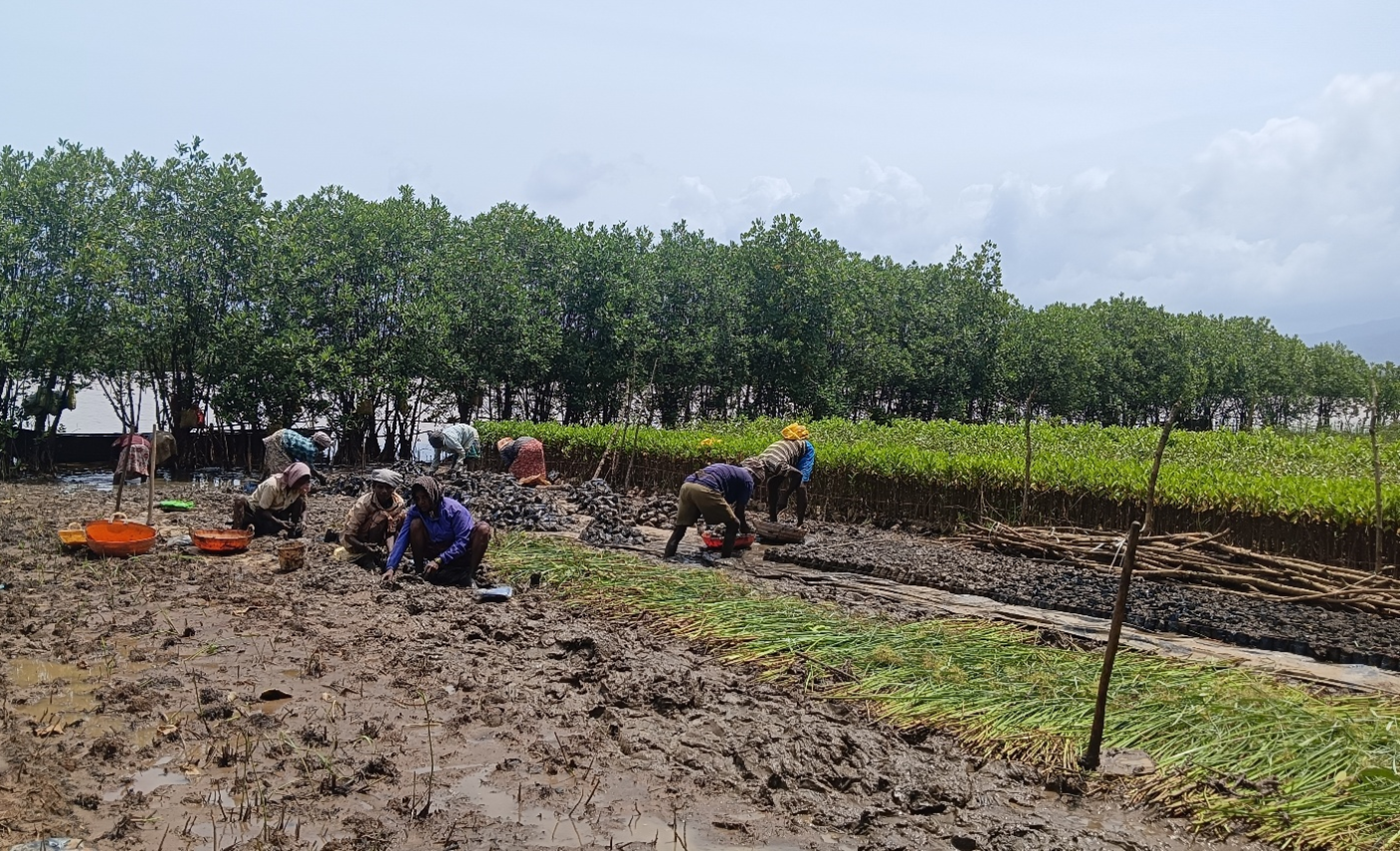
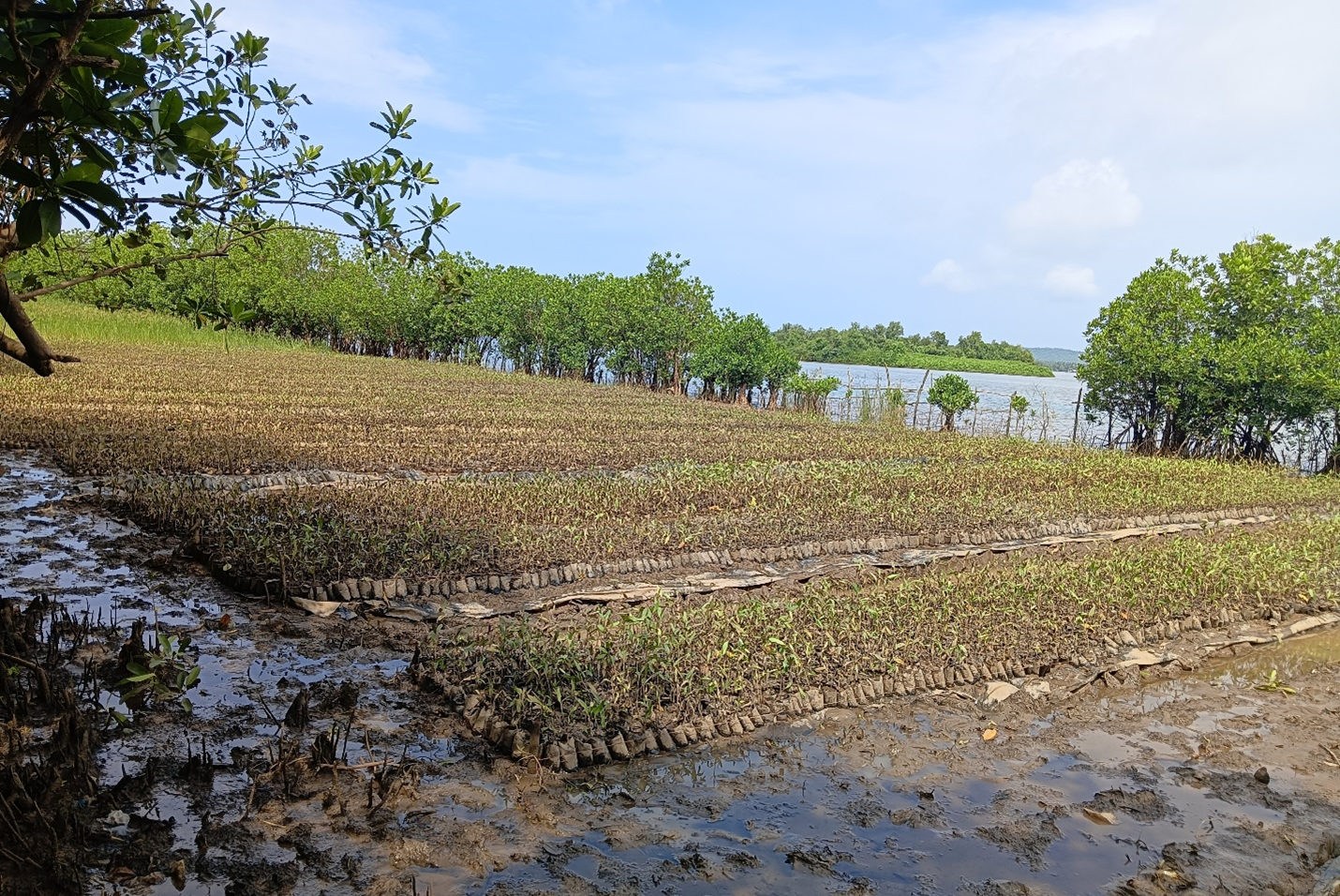
As part of this intervention, community-managed mangrove nurseries have been set up to raise native species such as Avicennia marina, Rhizophora mucronata, and Sonneratia apetala, which will later be transplanted into degraded estuarine and creek areas. Local fishers (Men and Women) and youth have been organized through Mangrove Conservation Associations (MCAs) and Eco Development Groups (EDGs) to take part actively in nursery management, plantation programs, and awareness campaigns highlighting the ecological and economic importance of mangroves. Capacity-building and livelihood training initiatives are also being organized to promote sustainable income-generating activities, including mangrove-based eco-tourism, nursery operations, honey collection, and organic aquaculture, thereby reducing pressure on natural resources.
The project integrates disaster risk reduction measures by aligning mangrove restoration activities with the efforts of the Uttara Kannada District Disaster Management Authority. Mangroves are promoted as natural buffers that reduce the impact of cyclones, tidal surges, and coastal flooding while enhancing soil stability and water quality. Awareness campaigns and school-based sensitization programs are being conducted to educate community members, students, and local decision-makers about the long-term benefits of mangrove conservation.
Additionally, the project places strong emphasis on awareness creation across different community segments, including men, women, and students. It aims to reach 36,000 individuals through Behavioral Change Communication (BCC) materials and outreach programs, eased by the establishment of a Mangrove Development Centre. The initiative also plans to raise and plant 800,000 mangrove saplings over 120 hectares of degraded mangrove area, ensuring large-scale restoration and long-term ecological stability along the Uttara Kannada coast.
Major Contributions:
So far, Awareness and education initiatives have reached over 1,700 community members through 125 Mangrove Awareness Programmes, supported by IEC materials including Kannada-translated videos and pamphlets on mangrove conservation and sustainable livelihoods.
Capacity-building efforts focused on mangrove seed collection and preparation, with firsthand training sessions improving local knowledge and participation; as a result, over 2,05,000 mangrove seeds were collected, and 2,00,000 saplings have been prepared by involving the local community in seed collection sapling preparation activities.
The establishment of Mangrove Development Centre has provided infrastructure to support nursery operations, training, and community engagement. While land preparation for plantation has been started, the project has successfully strengthened community participation, enhanced local capacity, and laid a solid foundation for upcoming mangrove restoration and plantation activities in the selected villages, contributing to ecological restoration and sustainable coastal livelihoods.
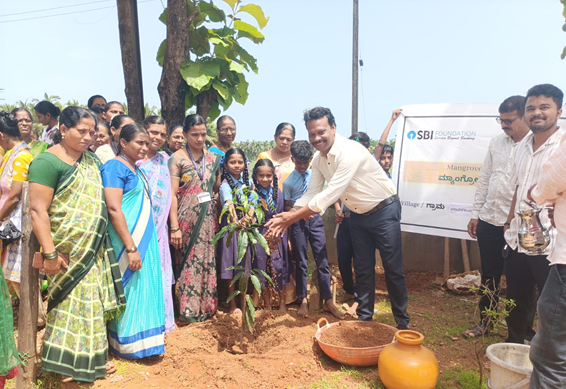
As a whole, it shows a nature-based solution that combines ecological restoration with livelihood improvement. The project is expected to significantly increase green cover, strengthen community participation, and enhance fisheries productivity in the region. By empowering local communities to function as custodians of mangrove ecosystems, the intervention contributes to climate resilience, biodiversity conservation, and sustainable coastal development.
The initiative aims to restore 120 hectares of degraded mangrove ecosystems through the planting of eight lakh saplings and propagules, significantly enhancing the green cover along the coastal belt. Mangrove Conservation Associations have been formed and trained in climate adaptation and initiative-taking conservation, fostering community-led stewardship of these critical ecosystems. Over 36,000 people will gain awareness about the ecological and economic importance of mangroves, while six hundred individuals from brackish water areas will receive specialized training in mangrove conservation and sustainable management practices.
Beyond restoration, the project has laid the foundation for sustainable livelihoods, promoting eco-tourism, mangrove-based nursery operations, honey collection, and organic aquaculture, ensuring long-term economic benefits for local communities. The increased resilience of mangrove forests provides enhanced coastal protection, reducing the impact of cyclones, tidal surges, and shoreline erosion. The restoration has also contributed to improving water quality in estuarine and coastal areas, while ongoing carbon sequestration processes in the healthy mangrove belts help mitigate climate change. Overall, the intervention is a successful integration of ecological restoration, community empowerment, and climate resilience, securing both environmental sustainability and livelihood security along Uttara Kannada’s coast.