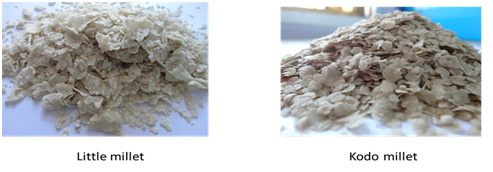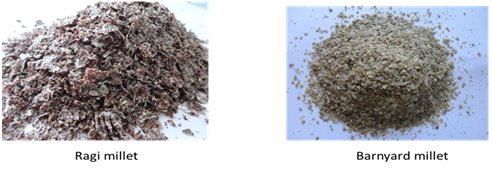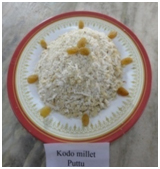
Small millets offer better nutrition with various micronutrients like vitamin B complex, calcium, iron and sulphur, high protein, high dietary fibre and low glycemic index when compared to mainstream cereals like rice and wheat (Saleh et al. 2013). They are known as both preventive and curative foods. In spite of these nutritional advantages, the consumption of small millets has drastically declined in the last four decades across South Asia. Some of the important reasons for the decline of small millets consumption are lack of adequate scientific proof of the nutritional benefits and near absence of appealing small millet food products in the market. The small millets were consumed in the production regions mainly as traditional preparations such as porridge and rice.
In these regions, the consumption has declined significantly and some of the important reasons are: i) social stigma attached to millet foods (food of poor and lower caste), and ii) lack of appeal of traditional food preparations, particularly to younger generations. There was a requirement for small millet recipes that are on par with mainstream rice/wheat recipes and that are attractive to younger generations to increase consumption in the production regions. In the non-production regions, where small millets are not familiar, there was a requirement for recipes and products that are familiar (instead of very new food products), convenient and attractive to the younger generations to increase consumption. Lack of appealing nutritious small millet products is one of the important reasons for not being able to break the social stigma associated with the consumption of small millets.
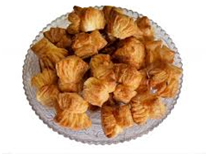
This is in turn a reflection of inadequate research on i) nutrient analysis, ii) development of attractive food products and iii) bioavailability of nutrients from small millet food products. Any effort for increasing consumption of small millets to address the malnutrition and rising incidence of non-communicable diseases have to address these research gaps and undertake large scale promotion measures to reach all sections of the population.
I. Our work so for
In the above mentioned background, the Revalorising Small Millets in Rainfed Regions of South Asia Project has undertaken research on two major aspects: (i) Proving the health benefits of small millets and (ii) Developing healthy and attractive products both for home and market based consumption. The specific initiatives taken were listed below:
1.1 Evaluation of different varieties of small millet crops for their nutritional values and consumption qualities
University of Guelph and Tamil Nadu Agricultural University undertook nutritional analysis of small millet samples from India, Nepal and North America (Canada and the US) as part of the project. The All India Coordinated Small Millets Improvement Project analysed finger millet landraces for zinc and calcium contents and identified suitable varieties for popping. Arthacharya Foundation in collaboration with ITI, Colombo, analysed nutritional and consumption attributes of few varieties of finger millet, foxtail millet and pulses in Sri Lanka. The important results are:
1.2 Development of small millet based food products for rural and urban consumers
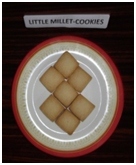
In India, incorporation of small millets (barnyard, kodo, finger and little millets) in traditional South Indian breakfast, sweets and snack foods was standardised. Bakery products like bread, cookies, cake, soup sticks and khari, pasta products like vermicelli, string hopper (Idiappam), macaroni and noodles, flaked and popped products and instant mixes using small millets were standardized and analysed for their nutritive value. On the whole 42 small millet food products were developed in India. These products were disseminated to 1473 persons including site families and to the entrepreneurs and food industries. In Sri Lanka ten finger millet products (finger millet hoppers, string hoppers, Pittu, Roti, Thalapa, Kandgi, Cake, Oil cake, Kokis and wandu hopper) were standardised and demonstrated to the rural and urban population. Three new products were introduced to Helabojun (a restaurant opened by the Dept. of Agriculture to introduce traditional food to consumers) at Peradeniya.
1.3 Bio-availability of nutrients from different product matrices
The developed products were evaluated for the sensory quality and acceptability, nutritional value and glycemic index (GI).
1.4 Dissemination of products developed in the project
Training programmes and demonstrations were organised for women, farmers, entrepreneurs and self-help group members on value added small millet products.
Know More Click Here